

Table of Contents
- Why Real Estate Investors Switch Accountants
- Best Time to Switch Accountants
- Prepare Your Financial Records and Documentation
- Evaluate Your New Real Estate Accountant's Expertise
- Questions to Ask a New Real Estate Accountant
- Draft Your CPA Transition Letter Template
- Execute the File Handoff and Data Migration
- Frequently Asked Questions
Last Updated: September 2, 2026
Why Real Estate Investors Switch Accountants
Real estate investors often outgrow their current accounting relationships. What worked for two rental properties may collapse under the complexity of a ten-property portfolio, partnerships, or LLC structures designed for tax optimization.
Many investors switch because their current accountant lacks specialized knowledge in real estate taxation, depreciation schedules, cost segregation analysis, or passive income strategies. A general tax preparer may file your return correctly but leaves thousands in deductions on the table.
Other reasons include poor communication, lack of proactive tax planning, high fees without corresponding value, or needing someone who understands real estate professional status or multi-entity structures. A CPA who doesn't ask about your investment strategy isn't managing your taxes; they're processing paperwork (nysscpa.org).
Best Time to Switch Accountants
Timing matters when switching real estate accountants. The worst moment is mid-April during tax season. The ideal window is November through January, before year-end planning deadlines. This allows your new CPA to review your structure, identify planning opportunities, and implement changes before December 31st.
If you're on a calendar year, January through March is your second-best window. Your prior return is filed and your new accountant has months to understand your portfolio before year-end planning begins.
Avoid switching during:
- March through May (peak tax filing season)
- Late November through early December (year-end planning crunch)
- Active negotiations on major real estate transactions
If unhappy during tax season, document issues and plan your transition for post-April 15th. A rushed switch introduces risk of missed deadlines and lost deductions.
Prepare Your Financial Records and Documentation
Before switching, organize your financial records. Your new CPA needs clean, complete data to understand your tax history and current position. Disorganized handoffs lead to missed deductions and incomplete audit trails.
Gather these core documents:
Tax returns (last 3-5 years): Collect copies of your personal returns (Form 1040), business returns (Schedule C, Form 1065, Form 1120-S), and all schedules and attachments.
General ledger and income statements: Export your general ledger for each property or entity for the last two years, including monthly income statements showing rental income, expenses, and profit/loss.
Depreciation schedules: Your new accountant needs to know exactly what assets have been depreciated, when they were placed in service, their cost basis, and the depreciation method used. Missing schedules create cascading errors.
Real estate transaction records: For each property, gather the original purchase documents (deed, settlement statement, title insurance), capital improvements with receipts and dates, and records of any sales or refinancing.

Expense documentation: Organize receipts and invoices for major expenses, repairs, maintenance, property management fees, insurance, and mortgage interest statements.
Bank and credit card statements: Provide 12 months of statements for accounts tied to your real estate business to establish the audit trail.
Entity formation documents: Provide formation documents, operating agreements, partnership agreements, and any amendments.
Loan documents: Gather mortgage statements, promissory notes, and documentation of loans between entities or to partners.
Your current accountant may resist providing complete files. Most will cooperate if you ask directly and provide written authorization. If resistance occurs, request your tax returns, depreciation schedules, and general ledger. Your new accountant can request the rest through professional channels if needed.
Evaluate Your New Real Estate Accountant's Expertise
Not all CPAs are equal in real estate taxation. A CPA specializing in real estate will understand cost segregation, depreciation recapture, passive activity loss limitations, real estate professional status, and entity structuring in ways a general tax preparer won't.
When evaluating a new real estate accountant, assess these competencies:
Real estate tax experience: How many years has the CPA worked with real estate investors? Ask about experience with your specific situation, rental properties, partnerships, LLC structures, or real estate professional status.
Cost segregation knowledge: Can they explain cost segregation, when it makes sense, and how it accelerates deductions on commercial or multifamily properties?
Entity structuring expertise: Do they understand how to structure real estate holdings for tax efficiency and liability protection? Can they explain trade-offs between S-corps, LLCs, partnerships, and sole proprietorships?
Passive activity loss rules: Do they understand the active participation exception, real estate professional status test, and how to structure investments to avoid passive loss limitations?
Audit defense capability: Will they represent you before the IRS, or refer you to a tax attorney? Some CPAs have enrolled agent credentials allowing direct IRS representation.

Interview at least two candidates. Ask for references from other real estate investors they work with. Call those references and ask whether the CPA proactively identifies planning opportunities, communicates clearly, and delivers value beyond basic tax preparation.
Information Services Unlimited has published "80-15-5: Stop The Epidemic Of Bad Tax Advisors," which breaks down what separates qualified specialists from generalists lacking real estate expertise.

Questions to Ask a New Real Estate Accountant
The right questions reveal whether a CPA truly understands your situation and can add strategic value.
Ask these specific questions:
"How would you structure my real estate holdings for tax efficiency and liability protection?" A strong answer explains trade-offs between entity types, addresses your specific situation, and recommends a structure with clear reasoning.
"What deductions or strategies am I likely missing?" A qualified real estate accountant asks about your properties, improvements, financing, and business activities before answering. They may mention cost segregation, bonus depreciation, passive activity loss planning, or opportunity zone strategies.
"How do you handle year-end tax planning?" You want a CPA who proactively reaches out in October or November to discuss income timing, deductions, entity structure changes, or retirement contributions.
"What's your fee structure, and what's included?" Understand whether fees are hourly, flat-fee, or percentage-based. Know what services are included and what costs extra.
"How do you stay current with tax law changes?" Ask how the CPA continues education and communicates new strategies to clients.
"Can you represent me in an IRS audit?" Do they have credentials to represent you directly, or will they refer you to a tax attorney?
"What's your experience with [your specific situation]?" Ask directly about their experience with your structure.
Listen for specificity. A CPA who asks follow-up questions and gives detailed answers understands real estate.
Draft Your CPA Transition Letter Template
A professional transition letter signals finality to your current accountant and protects you legally.
Here's a template you can customize:
[Your Name]
[Your Address]
[Date]
[Current CPA Name]
[CPA Firm Name]
[Firm Address]
Re: Termination of Tax Preparation Services
Dear [CPA Name]:
I am writing to inform you that I will be terminating our tax preparation and accounting relationship effective [date, typically end of current tax year or 30 days from letter date].
Please prepare a final invoice for services rendered through [date] and forward all tax documents, working papers, depreciation schedules, general ledgers, and other records related to my tax returns and accounting to:
[New CPA Name]
[New CPA Firm Name]
[Firm Address]
by [date, typically 10 business days].
I authorize the release of all records to my new accountant. If you have questions about the transfer, please contact me at [phone] or [email].
Thank you for your service.
Sincerely,
[Your Signature]
[Your Name]
Keep the letter professional and unemotional. Send it via email with read receipt requested, or certified mail. Keep a copy for your records.
Execute the File Handoff and Data Migration
The file handoff is where most transitions stumble. Poor handoffs create missing data and gaps in audit trails. Plan this step carefully.
Request all records in writing. Your transition letter should request specific documents: all tax returns (last 5 years), depreciation schedules, general ledger exports, bank reconciliations, and workpapers.
Agree on a format. Ask your current accountant to provide records in standard formats: PDF for tax returns, Excel or CSV for general ledger and depreciation schedules, QuickBooks backup files if applicable.
Set a deadline. Request that records be transferred within 10 business days. Most professional CPAs will comply.
Verify completeness. When you receive files, spot-check them. Open the general ledger and verify it shows income, expenses, and profit/loss for each property. Check depreciation schedules against your tax returns.
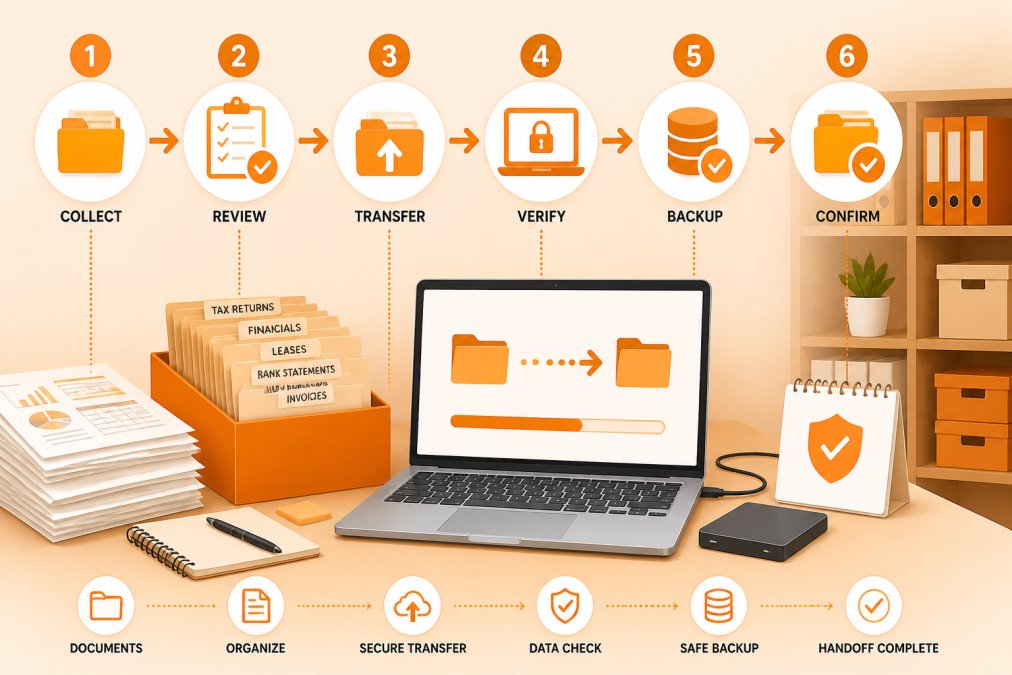
Coordinate with your new CPA. Your new accountant should guide this process and know exactly what they need and in what format.
Data migration to new software. If your new CPA uses different accounting software, plan for data migration. Ask how long this takes and what information you need to provide.
Test the data. After migration, your new CPA should reconcile imported data against your prior-year tax return. Depreciation totals should match. Any discrepancies should be identified and corrected before moving forward.
Establish a clean baseline. By the time your new CPA takes over, you should have a complete, accurate financial picture for the prior year.
The transition process typically takes 2-4 weeks from initial contact to complete handoff.
Switching real estate accountants is significant, but it's the right move if your current CPA isn't delivering specialized expertise, proactive planning, or clear communication. The process is straightforward: prepare your records, evaluate candidates carefully, ask the right questions, and execute a clean handoff.
The real benefit isn't just better tax compliance; it's access to strategic tax planning that saves thousands annually. A qualified real estate accountant identifies cost segregation opportunities, structures entities for liability protection, plans for passive activity loss limitations, and positions you for long-term wealth building (nysscpa.org).
Information Services Unlimited's educational programs, including "11 Powerful Tax Strategies For Real Estate Investors" and "The Ultimate Tax Bible Program," provide frameworks that sophisticated real estate investors use to minimize tax liability while protecting assets. These resources complement professional CPA services and help you ask the right questions when evaluating advisors.
The investment in finding the right accountant pays for itself through deductions you'd otherwise miss and strategies you'd never discover working with a generalist.
=== FAQ ANSWERS (audit these too, same rules) ===
[1] Q: Is it difficult to switch accountants mid-tax year? A: Switching mid-tax year adds complexity but is manageable with proper planning. The key is communicating early with your current accountant and ensuring a complete file handoff before the deadline. Ideally, switch after your tax return is filed and before the next fiscal year begins. If you must switch mid-year, request all relevant documents immediately and brief your new accountant on your specific tax situation, including depreciation schedules, capital gains, and passive income structures. Your new CPA will need time to review your records and understand your tax strategy.
[2] Q: What documents do I need to request from my current accountant? A: Request your complete financial records including the general ledger, depreciation schedules for all properties, prior-year tax returns, property management records, real estate transaction documentation, and any correspondence with the IRS. Also ask for your accounting software files, bank reconciliations, and records of all deductions claimed. If you have an LLC or partnership structure, request the operating agreement and capital account statements. Ensure you have an audit trail showing all entries made in prior years. These documents are essential for your new accountant to understand your tax compliance history and current tax liability.
[3] Q: When is the best time to switch accountants? A: The best time to switch accountants is after your tax return has been filed and accepted by the IRS, typically in late spring or early summer. This gives your outgoing accountant time to complete your current-year filing without disruption. Avoid switching during tax season (January through April) when your accountant is managing multiple deadlines. If you have rental properties with a fiscal year different from the calendar year, plan the switch after your fiscal year ends. Switching after tax season also allows your new accountant adequate time to review your financial records and develop an effective tax strategy before the next filing deadline.
[4] Q: How do I ensure a smooth transition of tax records to a new CPA? A: Create a file handoff checklist documenting every document your current accountant provides. Verify that all tax returns, depreciation schedules, and general ledger records match what you expect. Request an audit trail showing all adjustments made in prior years. Meet with your new accountant to review the documents together and confirm they understand your real estate investment structure, including any LLC formations, partnership arrangements, and property management details. Ask your new CPA to identify any gaps in documentation or areas needing clarification. This collaborative review prevents costly mistakes and ensures your new accountant is fully prepared to manage your tax compliance and strategy going forward.
Frequently Asked Questions
Is it difficult to switch accountants mid-tax year?
Switching mid-tax year adds complexity but is manageable with proper planning. The key is communicating early with your current accountant and ensuring a complete file handoff before the deadline. Ideally, switch after your tax return is filed and before the next fiscal year begins. If you must switch mid-year, request all relevant documents immediately and brief your new accountant on your specific tax situation, including depreciation schedules, capital gains, and passive income structures. Your new CPA will need time to review your records and understand your tax strategy.
What documents do I need to request from my current accountant?
Request your complete financial records including the general ledger, depreciation schedules for all properties, prior-year tax returns, property management records, real estate transaction documentation, and any correspondence with the IRS. Also ask for your accounting software files, bank reconciliations, and records of all deductions claimed. If you have an LLC or partnership structure, request the operating agreement and capital account statements. Ensure you have an audit trail showing all entries made in prior years. These documents are essential for your new accountant to understand your tax compliance history and current tax liability.
When is the best time to switch accountants?
The best time to switch accountants is after your tax return has been filed and accepted by the IRS, typically in late spring or early summer. This gives your outgoing accountant time to complete your current-year filing without disruption. Avoid switching during tax season (January through April) when your accountant is managing multiple deadlines. If you have rental properties with a fiscal year different from the calendar year, plan the switch after your fiscal year ends. Switching after tax season also allows your new accountant adequate time to review your financial records and develop an effective tax strategy before the next filing deadline.
How do I ensure a smooth transition of tax records to a new CPA?
Create a file handoff checklist documenting every document your current accountant provides. Verify that all tax returns, depreciation schedules, and general ledger records match what you expect. Request an audit trail showing all adjustments made in prior years. Meet with your new accountant to review the documents together and confirm they understand your real estate investment structure, including any LLC formations, partnership arrangements, and property management details. Ask your new CPA to identify any gaps in documentation or areas needing clarification. This collaborative review prevents costly mistakes and ensures your new accountant is fully prepared to manage your tax compliance and strategy going forward.
This article was written using GrandRanker